

Understanding the phrase “body rub” and what people mean in NYC
“Body rub” is a term you’ll see in listings, on storefronts, and in casual conversation, but it doesn’t carry a single, fixed meaning. For some people it’s simply a colloquial shorthand for bodywork or therapeutic massage: hands-on techniques that relieve muscle tension, reduce stress, and improve circulation. For others, the phrase can imply sensual services offered outside professional therapeutic standards.
In New York City the context matters: neighborhoods, business websites, and even the wording of an ad can hint at the service type. If you’re looking for therapeutic results, prioritize studios that say “licensed massage therapist,” list modalities like Swedish or deep-tissue, or belong to professional organizations. If you’re unsure, ask before booking—clear communication avoids awkward surprises.
Common types of bodywork you’ll encounter—and how they differ
Massage in NYC spans a wide spectrum: classical Swedish for relaxation, deeper techniques for chronic tension, and specialty options like sports massage or Thai bodywork that incorporate stretching. Each approach targets different needs. Some focus on calming the nervous system, while others aim to release adhesions and improve range of motion.
Terminology can blur—“body rub” sometimes appears next to “full-body massage” or “therapeutic session.” Look for descriptions of techniques and the therapist’s training rather than relying on a single label. Below are common modalities and when they’re useful.
- Swedish massage: long strokes, gentle pressure, ideal for relaxation.
- Deep tissue: concentrated pressure to break up muscle knots and chronic pain.
- Sports massage: dynamic, often used before or after athletic activity.
- Thai/Thai-yoga: stretching and compression, done on a mat with clothing on.
- Sensory or “sensual” bodywork: varies widely—ask explicit questions about boundaries and legality.
Legal and regulatory landscape in New York City
Regulations around massage, permits, and professional credentials are layered: city ordinances, state rules, and industry standards all come into play. Because specifics change, the safest approach is to verify credentials at the point of booking and consult official NYC websites for up-to-date licensing and business permit information.
Legitimate practices commonly display therapist certifications, a business permit, and contact information. Professional associations—such as the American Massage Therapy Association (AMTA) or Associated Bodywork & Massage Professionals (ABMP)—offer directories of credentialed practitioners. If a business avoids answering straightforward questions about licensing or draping policy, consider that a red flag.
How to find reputable body rub and massage providers in NYC
Start with reputable platforms: established spas, clinic websites, and professional directories tend to vet practitioners or require proof of training. User reviews on Google and Yelp are useful but read critically—look for detailed accounts of technique, cleanliness, and communication rather than brief praise or complaints.
When calling or messaging, use these simple checks to evaluate professionalism. Ask directly about the therapist’s training and certifications. Confirm the modalities offered. Ask about draping, cloth removal policies, and what a typical session includes. Clear, transparent answers are a good sign.
- Verify credentials: schooling, license/registration, and association membership.
- Check the facility: clean space, private treatment rooms, clear service menu.
- Read recent reviews: focus on consistency across multiple reviewers.
- Use referrals: ask friends, trainers, or clinicians for recommendations.
What to expect during a professional session
A professional massage begins with an intake: questions about medical history, pain points, medications, and any areas to avoid. Honest answers help therapists tailor pressure and technique safely. This conversation also establishes consent and boundaries—both essential parts of a therapeutic relationship.
Draping is standard practice; only the area being worked on is uncovered. Therapists use oils or lotions and adjust pressure based on your feedback. Sessions commonly last 30, 60, or 90 minutes. Aftercare may include hydration, gentle stretching suggestions, and notes on follow-up sessions if recommended.
Pricing, tipping, and appointment etiquette in NYC
Prices in Manhattan and other boroughs vary widely depending on location, experience, and the setting. As a rough guideline, expect something like $70–$150 for a one-hour therapeutic massage at a licensed spa or clinic, with boutique studios and renowned therapists sometimes charging more. Budget options and packages can lower the per-session cost.
Tipping is customary in the U.S.; 15–25% is typical for good service. Respectful behavior and punctuality are part of etiquette—arrive a few minutes early to fill out intake forms, notify the business promptly if you must cancel, and follow the studio’s stated cancellation policy.
Safety, consent, and red flags to watch for
Your safety and comfort should guide every interaction. Consent is ongoing: you can decline any technique, change pressure, or stop the session at any time. A professional therapist welcomes feedback and adjusts accordingly. If a therapist pressures you to undress beyond professional norms or engages in sexual behavior, insist on ending the session and leave the premises if you feel unsafe.
Key red flags include inconsistent contact details, no visible credentials, ambiguous service descriptions, and refusal to discuss draping or boundaries. If you suspect illegal activity, report it to local authorities or consult NYC consumer protection resources. Trust your instincts—comfort matters as much as the massage itself.
- Clear intake and consent process: good sign.
- Private room with proper draping: expected standard.
- Pressure to receive sexual services or requests for extra cash in private: immediate red flag.
- Unwillingness to provide credentials or business license: avoid.
Quick comparison: common modalities, session length, and typical NYC price
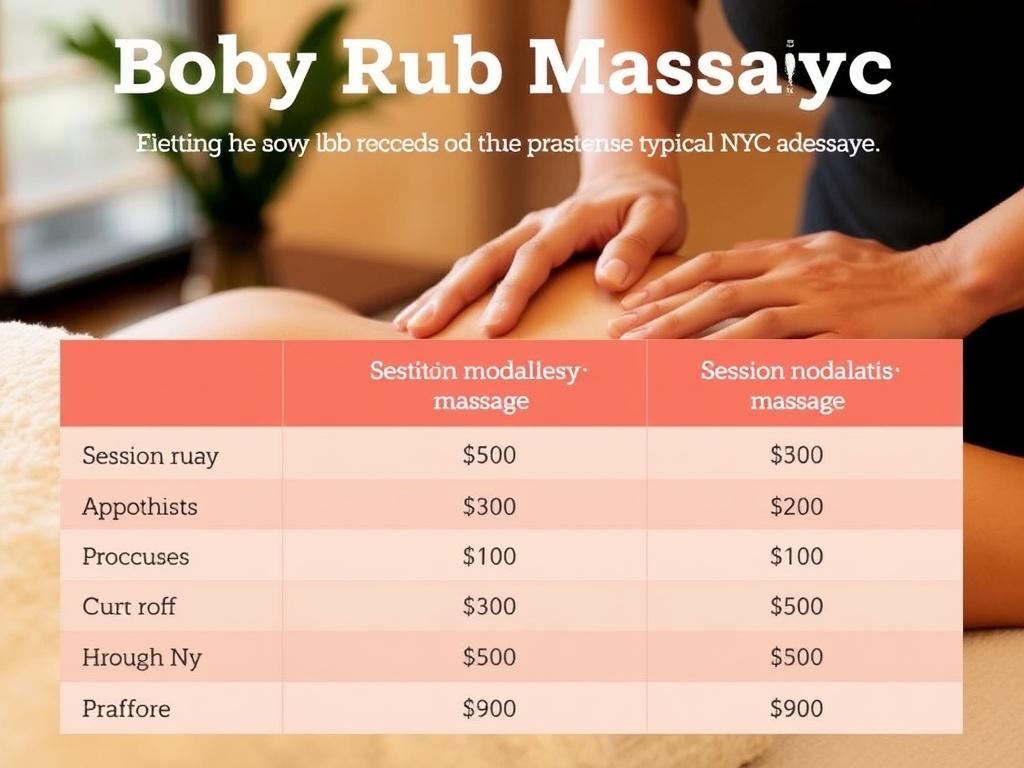
| Modality | Description | Typical Session Length | Approx. NYC Price (one hour) |
|---|---|---|---|
| Swedish | Relaxing strokes to improve circulation and ease tension. | 30–90 minutes | $70–$120 |
| Deep Tissue | Firm pressure to address chronic muscle tightness and adhesions. | 30–90 minutes | $80–$150 |
| Sports | Targeted work for athletes; includes stretching and conditioning. | 30–90 minutes | $80–$140 |
| Thai / Assisted Stretching | Clothed sessions emphasizing rhythmic compression and stretching. | 60–120 minutes | $90–$160 |
| “Body Rub” / Sensory | Varies widely; may range from therapeutic full-body massage to services with sensual intent. Ask specifics. | 30–90 minutes | $60–$140 |
Frequently asked questions
Is a “body rub” the same as a medical massage? Not necessarily. A medical or therapeutic massage is designed with clinical goals—pain relief, rehabilitation, or improved mobility—often coordinated with a healthcare provider. “Body rub” is a broader term that can cover therapeutic work but may also be used by businesses offering non-therapeutic services. Always clarify intent before booking.
How should I prepare for my session? Wear comfortable clothing to and from the appointment. Bring a brief list of medications and relevant health history. Avoid heavy meals right before a session, and plan to drink water afterward. If you have specific concerns—high blood pressure, recent surgery, or pregnancy—tell the therapist in advance so they can adapt techniques safely.
Practical checklist before you book
Use a quick checklist to screen providers: Does the salon or therapist list certifications? Are reviews substantive and recent? Is the location clean and professional? Do they clearly state cancellation, pricing, and draping policy? If answers are vague, look elsewhere. Small up-front checks save time and reduce risk.
When in doubt, seek referrals from healthcare professionals, gyms, or trusted friends. A short conversation with a prospective therapist will usually reveal whether they understand your goals and can work within your needs.
Conclusion
Finding a safe, effective body rub or massage in NYC comes down to clear communication, basic vetting, and trusting your instincts: choose therapists who explain techniques, share credentials, and respect boundaries; prioritize clean, licensed facilities; and don’t hesitate to ask questions about draping, training, and pricing before you book.